
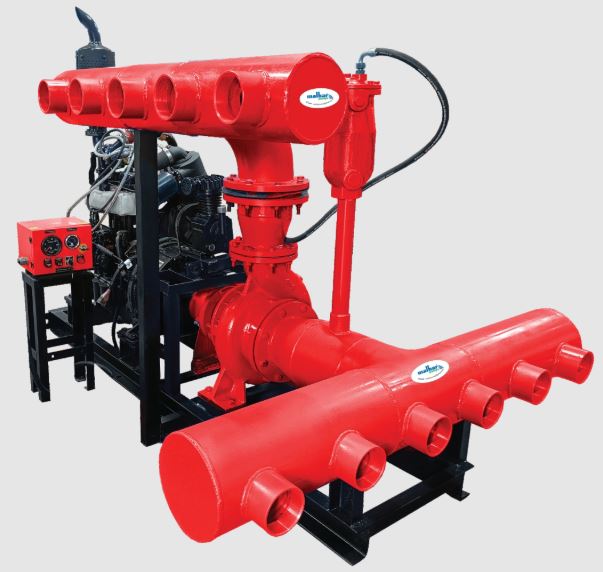

A Non Clog Pump is designed to handle liquids containing solid particles, fibers, sludge, and other suspended materials. These pumps are commonly used where conventional pumps may face blockage problems during operation. Their design supports smooth fluid movement and helps reduce interruptions caused by clogging.
Industries such as wastewater treatment, sewage management, manufacturing, agriculture, and process industries often require pumps that can handle challenging fluids. Therefore, selecting the right pump according to the application is important for reliable performance.
What Is a Non Clog Pump?
A Non Clog Pump is a pumping system designed to move liquids containing suspended solids without frequent blockage. Its internal design provides a suitable passage for solids and other materials present in the pumped liquid.
These pumps can be used for wastewater, sewage, sludge, slurry, and other fluids where solid particles may be present. The exact pump design depends on the type of liquid, particle size, flow requirements, and operating conditions.
How Does a Non Clog Pump Work?
The working principle of a Non Clog Pump is similar to other centrifugal pumping systems. The motor supplies mechanical energy to the pump, causing the impeller to rotate and generate pressure.
Liquid enters through the suction side and moves through the pump before leaving through the discharge outlet. The pump’s design helps allow suspended materials to pass through with a lower risk of blockage.
Proper sizing is important because flow rate, pressure, pipe dimensions, and liquid characteristics can affect pump performance.
Applications of Non Clog Pumps
A Non Clog Pump can be useful in applications where liquids contain solids or other materials that may cause conventional pumps to clog. Common applications include:
- Wastewater treatment plants
- Sewage pumping systems
- Industrial wastewater handling
- Sludge transfer
- Drainage systems
- Agricultural applications
- Process industries
- Effluent treatment plants
- Commercial wastewater systems
The appropriate pump should be selected according to the characteristics of the liquid and the requirements of the pumping system.
Benefits of a Non Clog Pump
A Non Clog Pump can offer several advantages in applications involving solids and suspended materials. Its design helps reduce the possibility of blockages and supports continuous liquid transfer.
Other potential benefits include:
- Reduced clogging risk
- Reliable fluid handling
- Suitable for wastewater applications
- Ability to handle suspended solids
- Practical industrial design
- Easy inspection and maintenance
- Suitable for demanding applications
Actual performance depends on the pump model, liquid characteristics, installation, and operating conditions.
How to Choose the Right Non Clog Pump
Choosing the correct Non Clog Pump requires careful evaluation of the application. Start by identifying the required flow rate and discharge pressure. These values should match the needs of the pumping system.
Next, consider the type and size of solids present in the liquid. The pump should have a suitable passage and construction for the materials it needs to handle.
Other factors include liquid temperature, viscosity, suction conditions, pipeline length, motor capacity, and installation environment. Consulting an experienced pump supplier can help in selecting a suitable configuration.
Importance of Proper Installation
Proper installation plays an important role in pump performance. The pump should be installed on a stable foundation with correctly connected suction and discharge pipelines.
Incorrect pipe sizing or poor alignment can cause vibration and affect operating efficiency. Therefore, installation should follow the manufacturer’s recommendations and the requirements of the specific application.
Before commissioning, inspect the pump, motor, pipelines, valves, electrical connections, and other components to ensure that the complete system is ready for operation.
Why Regular Maintenance Matters
Regular maintenance helps maintain reliable performance and identify potential problems early. A Non Clog Pump should be inspected according to its operating conditions and manufacturer’s recommendations.
Maintenance may include checking bearings, seals, couplings, impeller condition, electrical connections, and pipeline connections. Unusual vibration, noise, leakage, or reduced flow should be investigated promptly.
A planned maintenance schedule can help reduce unexpected downtime and support longer equipment life.
Why Choose a Reliable Pump Manufacturer?
A reliable pump manufacturer can provide technical support when selecting and installing industrial pumping equipment. The supplier can help evaluate flow requirements, pressure, liquid characteristics, motor capacity, and application conditions.
Malhar Pump provides pumping solutions for various industrial and commercial applications. When choosing a Non Clog Pump, customers should review the technical specifications and select equipment that matches their actual operating requirements.
Frequently Asked Questions
1. What is a Non Clog Pump?
A Non Clog Pump is designed to transfer liquids containing suspended solids, sludge, sewage, and other materials while reducing the risk of blockage.
2. Where are Non Clog Pumps used?
They are commonly used in wastewater treatment, sewage systems, industrial wastewater handling, sludge transfer, drainage, and other applications involving solids.
3. Can a Non Clog Pump handle solid particles?
Yes. These pumps are designed for applications where suspended solids may be present. The suitable pump depends on the type and size of solids.
4. How do I select the right Non Clog Pump?
Consider flow rate, pressure, solid particle size, liquid characteristics, temperature, motor capacity, suction conditions, and pipeline requirements.
5. Does a Non Clog Pump require regular maintenance?
Yes. Regular inspection of the pump, motor, bearings, seals, impeller, and other components helps maintain reliable operation.
Conclusion
A Non Clog Pump is a practical pumping solution for applications involving wastewater, sewage, sludge, and liquids containing suspended solids. Its suitable internal design can help reduce blockage problems while supporting reliable fluid transfer.
For the best results, select the pump according to flow, pressure, solid content, liquid characteristics, motor capacity, and installation conditions. Proper installation and regular maintenance are also important for dependable operation. Contact Malhar Pump to discuss your pumping requirements and find a suitable solution for your application.


