
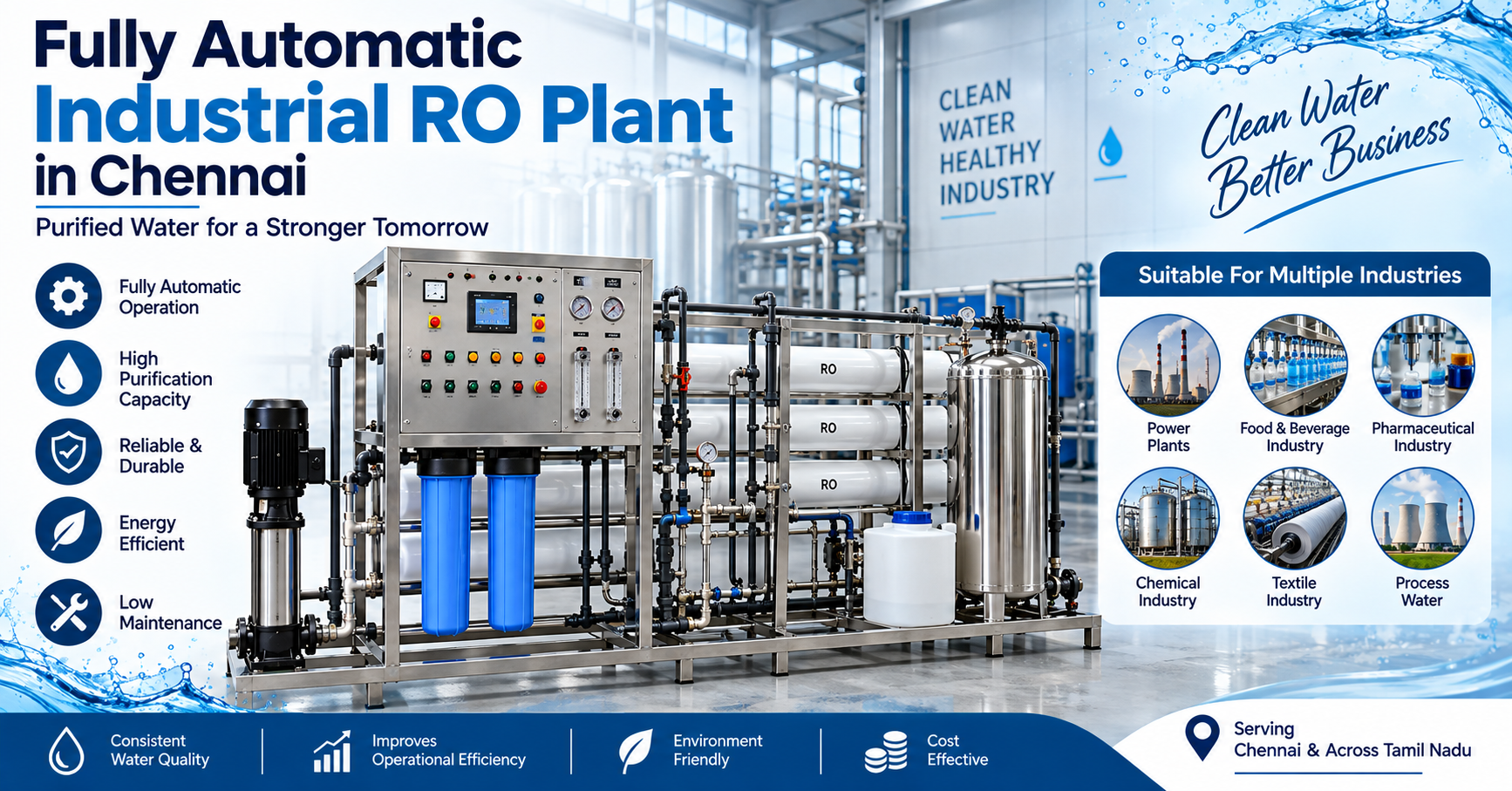

Clean water is essential for smooth industrial operations. Many industries need treated water for production, cleaning, cooling, and other processes. However, untreated water can contain dissolved salts, chemicals, minerals, and impurities.
A Fully Automatic Industrial RO Plant in Chennai offers a practical solution for these challenges. It uses reverse osmosis technology to reduce unwanted substances from water. Moreover, automation helps simplify plant operation and monitoring.
Chennai has many industries with different water treatment needs. Therefore, businesses require reliable systems that can provide consistent water quality. Alef Technologies provides industrial water treatment solutions designed around these operational needs.
Why Industries Need Advanced RO Water Treatment
Industrial water quality can affect both production and equipment. Hard water may cause scale buildup inside pipes, boilers, and other machinery. Similarly, dissolved solids can affect manufacturing processes.
An industrial RO system helps reduce these problems by using a semi-permeable membrane. The membrane allows water molecules to pass while restricting many dissolved impurities.
Furthermore, treated water can support better process control. It may also help reduce maintenance needs when used as part of a suitable water management system.
Industries commonly use RO plants for:
- Manufacturing processes
- Boiler feed water
- Cooling systems
- Pharmaceutical applications
- Food and beverage production
- Textile operations
- Chemical processing
- Commercial water treatment
The exact treatment process depends on the source water and the required output quality.
Key Benefits of a Fully Automatic Industrial RO Plant in Chennai
A Fully Automatic Industrial RO Plant in Chennai can offer several operational benefits. Automation reduces the need for constant manual control. It also helps operators monitor important plant functions.
Consistent Water Treatment
Automatic controls help maintain stable operating conditions. As a result, businesses can achieve more consistent treatment performance.
Sensors and control systems can monitor parameters such as pressure, flow, and water quality. Operators can then identify unusual conditions quickly.
Lower Manual Work
Traditional systems may require frequent manual adjustments. In contrast, automated RO plants can handle several routine functions automatically.
This can save operator time and simplify daily plant management. However, regular inspection and maintenance remain important.
Better Resource Management
Modern RO plants can be designed to manage water and energy efficiently. Proper system sizing also helps avoid unnecessary operating costs.
In addition, businesses can use suitable pretreatment to protect RO membranes. This may improve membrane life and overall system performance.
How an Industrial RO Plant Works
Understanding the basic process makes RO technology easier to evaluate. A typical industrial system includes several treatment stages.
Pretreatment
First, incoming water passes through pretreatment equipment. Depending on the water source, this stage may include sand filtration, carbon filtration, or softening.
Pretreatment removes larger particles and reduces substances that could damage the RO membrane.
Reverse Osmosis
Next, high-pressure pumps push pretreated water toward the RO membrane. The membrane separates treated water from many dissolved impurities.
The purified water is known as permeate. The remaining concentrated water is called reject or concentrate.
Post-Treatment
Finally, the treated water may receive additional conditioning. The required post-treatment depends on the intended application.
For example, some industries may need specific mineral levels or additional disinfection before using the water.
Choosing the Right Industrial RO Plant
Selecting an RO plant should not depend only on price. Businesses should first understand their water quality and production requirements.
Start by testing the raw water. Important parameters can include total dissolved solids, hardness, pH, turbidity, and specific contaminants.
Next, determine the required capacity. A small manufacturing unit may need a different system from a large industrial facility.
Consider these factors before selecting a system:
- Raw water quality
- Required water capacity
- Required treated water quality
- Daily operating hours
- Available space
- Power availability
- Pretreatment requirements
- Membrane replacement needs
- Maintenance support
A professional water treatment provider can help match the system with actual site requirements.
Maintenance Practices for Industrial RO Systems
Regular maintenance is essential for reliable RO performance. Even an automated system needs proper inspection.
Operators should monitor pressure, flow, and water quality regularly. They should also check filters and pumps according to the manufacturer’s recommendations.
Membranes may require cleaning when performance drops. Cleaning schedules should depend on operating conditions rather than a fixed assumption.
Additionally, replacing worn filters on time can protect downstream equipment. Proper maintenance can help reduce unexpected shutdowns and extend equipment life.
Alef Technologies can help businesses evaluate their industrial water treatment requirements and select suitable RO solutions.
Frequently Asked Questions
1. What is an industrial RO plant?
An industrial RO plant treats water using reverse osmosis membranes. It reduces many dissolved salts and impurities from water.
2. What does fully automatic mean in an RO plant?
A fully automatic system uses controls and sensors for routine operations. These systems can automate functions such as startup, shutdown, and certain monitoring tasks.
3. How do I choose the right RO plant capacity?
Capacity depends on daily water demand and the required treated water quality. A water analysis and process assessment can help determine the correct capacity.
4. Does an industrial RO plant need pretreatment?
In most cases, suitable pretreatment is important. It helps protect RO membranes from suspended solids, hardness, and other harmful substances.
5. How often should an industrial RO plant be maintained?
Maintenance frequency depends on water quality, usage, and system design. Regular monitoring helps determine when filters, membranes, or other components need attention.
Conclusion
A Fully Automatic Industrial RO Plant in Chennai can support industries that need dependable treated water. Automation can simplify routine operations while helping maintain consistent treatment conditions.
However, the right system depends on water quality, capacity, application, and operating requirements. Therefore, businesses should assess these factors before installation.
For industries planning a new water treatment setup or upgrading an existing system, Alef Technologies can provide guidance based on practical industrial requirements. Contact a qualified water treatment professional to discuss your site needs and identify a suitable RO solution.


